Hyperhub
Hyperhub/News
Official sources
Ecosystem Feed

News

Official Hyperliquid announcements and HIP-3 ecosystem updates, normalized into one chronological feed.

01 /

News Feed

Jeff
Jeff · X · 2026-09-18 10:18 UTC

Most tech giants in the 2000s built their infrastructure and product as one entangled unit. Amazon had the foresight to separate out AWS as an API layer, of which Amazon retail was the first of many users. Today, AWS generates more profit than all of Amazon's other business lines combined. Hyperliquid is built with the same philosophy. Housing all of finance requires thoughtfully designed, open financial primitives. Each primitive should obey the Unix principle of "Do one thing and do it well." Talented builders then have the foundation to chain these together to create magical applications. HyperCore borrowing is an example to highlight this philosophy in action. Most other platforms implement portfolio margin by marking an account's collateral to market value with an LTV haircut, creating borrowed assets without an explicit lender. This system is simpler to implement, but misses a golden opportunity for composability. Hyperliquid instead begins with a borrow/lend protocol on HyperCore. Every borrowed asset is sourced from a supplier, so risk is isolated within the borrow/lend primitive instead of platform-wide. HyperCore's portfolio margin system is implemented as an orchestration layer that composes borrow/lend, with other primitives such as perps, spot, and outcome trading. This decomposition has several nice corollaries: 1. Today's announcement of manual borrowing is not a new feature, but simply an extension of the underlying primitive. Borrowers on day one have access to 400M and growing of supplied liquidity. 2. Portfolio margin users earn interest on their idle stablecoin collateral. This is not a new feature, but a natural byproduct of composing trading with lending. 3. System safety is easier to reason about when perp and borrow/lend margining are independent. In the same way that math theorems almost prove themselves when the right abstractions are defined, composable designs just feel right.

@HyperliquidX

Manual borrows are live on Hyperliquid Portfolio margin and manual borrows use the same underlying HyperCore infrastructure, with $269M in assets borrowed today. Users can supply HYPE and BTC as col…

Jeff
Jeff · X · 2026-08-19 09:02 UTC

Someone recently shared this paper with me, which rigorously studies the execution improvement of visible TWAPs on Hyperliquid: "Trading in the Sunshine or in the Shade: Market Impact and Adverse Selection on Hyperliquid," by Davide Barone and Fabrizio Lillo. In physics, theorists can say all they want, but the case isn't closed until an experimentalist comes with the cold hard data. So thank you to the authors of this paper for their hard work! The paper demonstrates that liquidity net tightens as onchain TWAPs surface, improving the average execution of the TWAP order. This has been a deeply personal question for me. Even before building Hyperliquid, I've defended from first principles that transparent trading ought to improve execution for non-toxic flow. This is a corrollary of the efficient market hypothesis, but the amount of pushback always surprised me. I've quote tweeted a previous post where I make the argument in detail. Transparency and equal access bring improved execution over traditional private venues. It's an honor to build with everyone to upgrade the financial system with onchain technology.

@chameleon_jeff

Thank you to everyone who took the time to thoughtfully respond to my post on transparent markets. I understand that the thesis is controversial and that Hyperliquid is at a new frontier as the first…

Jeff
Jeff · X · 2026-08-12 15:18 UTC

This is a cool dashboard: historical and realtime liquidity comparisons across venues. Hyperliquid is not only the most liquid venue for major crypto and RWA perps, it's more liquid by an *order of magnitude* for some of them like the S&P500. Thanks to the ASXN team for building this!

@asxn_r

We shipped a new Liquidity Comparison dashboard: cross-venue liquidity analytics for @HyperliquidX vs Binance, Coinbase, Lighter, OKX, and Bybit. Compare depth, spreads, and slippage across venues i…

Jeff
Jeff · X · 2026-07-03 11:45 UTC

Africa's largest crypto exchange will power their core perps offering directly using Hyperliquid's onchain liquidity. This is a major milestone that will redefine how the next generation of financial applications are built. The breakthrough of cloud computing was that any startup could quickly test their idea, with the comfort that the infrastructure would scale with their business. As the most liquid global venue for assets such as BTC, Hyperliquid will play the same role in the global economy. By tapping into the deepest onchain liquidity, builders can instead focus on their product and users. Huge congratulations to the VALR team. We are honored that they chose to build on Hyperliquid. Excited to scale together!

@VALRdotcom

We are pleased to announce the imminent launch of 'Perps' on VALR, a new cross-asset class perpetuals product that introduces more than 200 markets to the platform. The new product is delivered thro…

Jeff
Jeff · X · 2026-05-15 17:38 UTC

I spent the past few days in Washington with @hyperliquidpc meeting with policymakers during the historic advancement of the Clarity Act. We discussed Hyperliquid, the benefits that it offers to American consumers, and the regulatory path to bring onchain derivatives markets into the United States. Some conversations were technical with an impressive baseline understanding of Hyperliquid. Discussions included how onchain trading is a financial innovation that has clear global user demand. Other conversations focused more on a first principles introduction to defi and the promise of onchain markets. It was encouraging to see bipartisan support for thoughtful regulation of crypto. I look forward to continuing discussions in DC and working hard to make American access to Hyperliquid a reality.

Jeff
Jeff · X · 2026-05-14 14:51 UTC

Excited to see everyone come together for this historic moment. AQAv2 brings the protocol-aligned stablecoin model that @Nativemarkets trail-blazed to USDC with @Coinbase and @Circle's commitment to Hyperliquid. The community no longer has to choose between liquidity and alignment. Our industry will face adversity as we continue to grow. It gives me hope seeing titans of the industry come together to build for users and bring all of finance onchain.

@HyperliquidX

Coinbase has announced its plan to activate AQAv2 on USDC as the treasury deployer, with Circle serving as the technical deployer responsible for CCTP and native cross-chain infrastructure. Both Coin…

Jeff
Jeff · X · 2026-04-13 15:35 UTC

Thanks @domcooke for spending months on researching and writing this piece. Einstein once said, "If you can't explain it simply, you don't understand it well enough." By that measure, Dom has blown me away with how deeply he came to understand Hyperliquid and what we're all building together. When someone asks what "housing all of finance" means, I'm proud to point them to this piece. I hope readers appreciate just how much Dom and his team put into their work. It reflects the thoughtful craft that is in Hyperliquid's DNA. Special thanks to @patrick_oshag for taking a bet on Hyperliquid's story.

@colossusmag

This is the story of Hyperliquid, the most profitable startup per employee on earth, told from a guarded office in Singapore. Last year, its team of 11 generated $900 million in profit. It's 3 years…

Jeff
Jeff · X · 2026-03-18 14:26 UTC

Huge congratulations to TradeXYZ and S&P for this historic partnership. I'm honored that these teams choose to build on Hyperliquid. Seeing official S&P500 perpetual futures launch exclusively on Hyperliquid is a validation of everyone's past years of hard work: global access to decentralized finance, perpetual futures as 24/7 price discovery, and Hyperliquid upgrading the existing financial stack to house all of finance. The S&P500 is synonymous with "the market," a single number that captures the essence of the largest economy in the world. Looking forward to tracking the world's most important financial gauge 24/7 on the most liquid permissionless markets.

@tradexyz

S&P Dow Jones Indices and trade[XYZ] have joined forces to launch the first official S&P 500 perpetual contract, available exclusively on Hyperliquid. For 69 years, the S&P 500 has been a defining r…

Jeff
Jeff · X · 2026-02-20 02:59 UTC

It was great to have a second conversation with @KevinWSHPod more than a year after the first. While the first conversation was a general introduction to Hyperliquid's mission and philosophy, the second goes deeper into technical points. We also discuss how the ecosystem and vision have expanded since then. Thanks for having me on!

@KevinWSHPod

E159: @Hyperliquidx: Housing all of Finance @chameleon_jeff came back on the When Shift Happens Podcast to talk about the Hyperliquid journey since the TGE and what the future holds for one of the m…

Jeff
Jeff · X · 2026-02-18 14:26 UTC

I’m excited to support the @HyperliquidPC launch. The Hyperliquid ecosystem needs a policy voice that represents our core values in DC. I’ve gotten to know @jchervinsky and seen his principled and unwavering support of defi over the years. There is no better person to advocate for Hyperliquid and defi broadly in this critical time in policy discussions. HPC will champion the message that Hyperliquid and defi align with core American values: transparency, fairness, and financial freedom for all. Since the chain’s genesis three years ago, Hyperliquid has pushed the limits of decentralized financial infrastructure. It’s been an honor to work with such a passionate and diverse group of builders toward the ambitious goal of housing all of finance in a fair and transparent system. However, this decentralized stewardship and development meant that Hyperliquid lacked a unified voice in important policy discussions until now. At this point, Hyperliquid has grown to where “housing all of finance” is more than a tagline. There is a tangible and urgent possibility of upgrading the tech stack of the existing financial system, bringing immense value and accessibility to everyone. Democratizing finance requires education and advocacy for laws that protect users and builders alike. Global financial regulation will be shaped in the United States, and we must work to ensure that these new policies thoughtfully embrace the potential of the new financial system enabled by Hyperliquid. I’m confident that the team at HPC will take on this challenge and push for a clear, regulated path for defi to thrive.

@HyperliquidPC

We are Hyperliquid Policy Center. HPC is a research and advocacy nonprofit focused on advancing a clear path for decentralized finance to thrive in the USA. We will introduce policymakers to @Hyper…

Jeff
Jeff · X · 2026-01-26 16:12 UTC

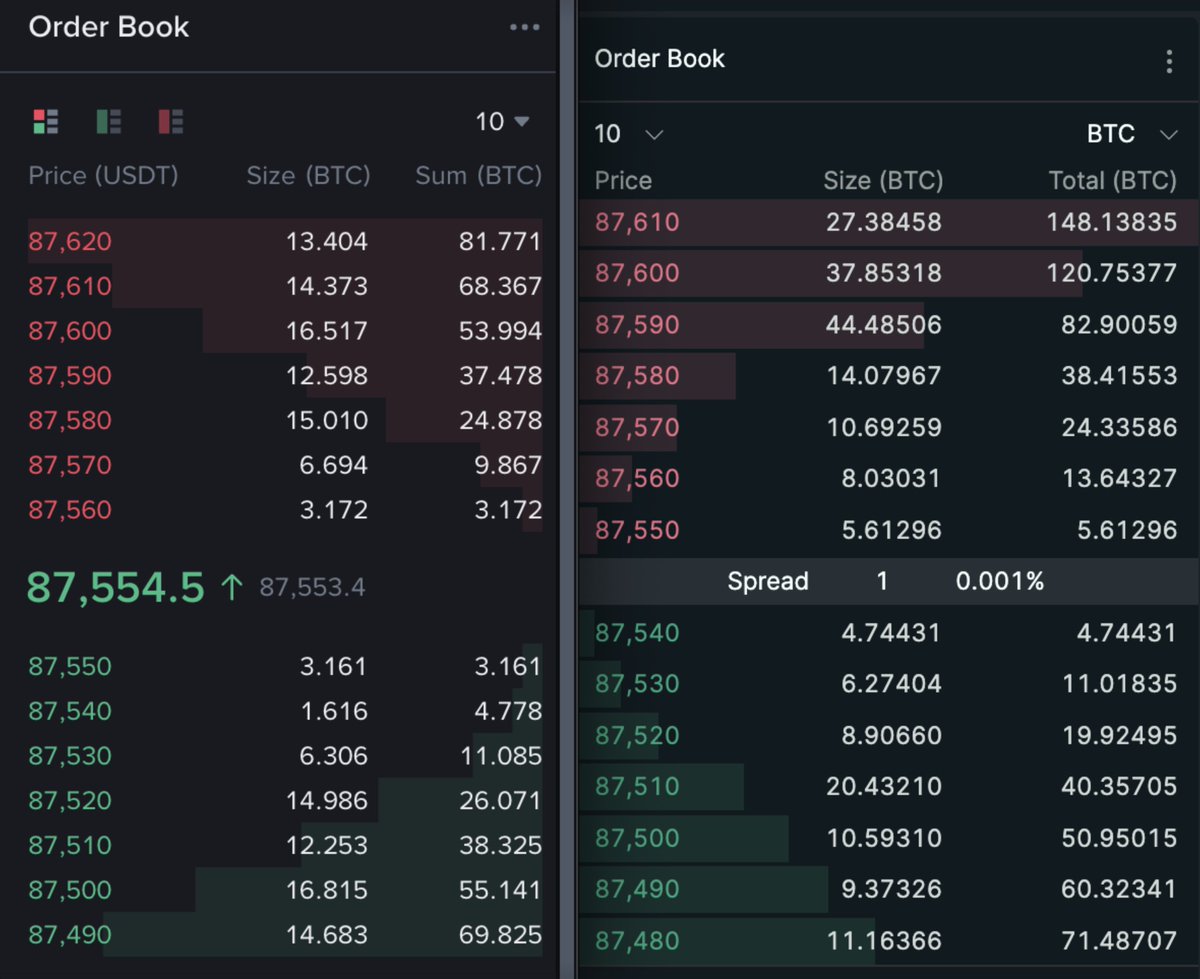
Hyperliquid has quietly achieved an important milestone of becoming the most liquid venue for crypto price discovery in the world. See below for side by side comparison of BTC perps on Binance (left) and Hyperliquid (right). With HIP-3 teams leading the way, Hyperliquid has also grown to become the most liquid venue for perps on tradfi assets. Thank you to everyone's hard work as we upgrade the financial system and house all of finance.

@HyperliquidX

HIP-3 open interest reached an all-time high of $790M, driven recently by a surge in commodities trading. HIP-3 OI has been hitting new ATHs each week. A month ago, HIP-3 OI was $260M.

Jeff news image
Jeff
Jeff · X · 2026-01-01 18:02 UTC

Integrity has always been one of Hyperliquid's core values. The house of all finance must be credibly neutral. This means no private investors, no market maker deals, and no protocol fees to any company. The initial state of any blockchain is a crucial part of its story that can never be erased. The original ethos of Bitcoin was a permissionless network accessible to all. Hyperliquid's genesis distribution followed this spirit, going entirely to early users with core contributors excluded. The full distribution is verifiable onchain without obfuscation. This principle of fairness frustrates a few users and builders who are used to special treatment. It means that Labs has zero tolerance for team members with integrity yellow flags. It means we do things the hard way as a community. But the world deserves a financial system owned by the people, where fairness to all users is in the DNA. Nothing else is worth building.

@chameleon_jeff

No investors No paid market makers No fees to the dev team No insiders @HyperliquidX

Jeff
Jeff · X · 2025-12-10 01:38 UTC

Those who can, do Those who can't, fud Before writing a paper maybe learn the definition of what you are studying? ADL does not "transfer pnl to HLP." It treats HLP entirely symmetrically with users. **ADL has nothing to do with HLP or backstop liquidations** ADL did not "destroy $653 million of pnl" either. If you don't understand what you're talking about, you are not qualified to spread lies masked by fancy ML terms to sound smart. It's a shame that these are the "academics" that the industry looks up to.

Jeff news image
Jeff
Jeff · X · 2025-11-25 15:23 UTC

Hyperliquid supports permissionless perps on anything. As all of finance moves onchain, there is a billion dollar opportunity to build a mobile app for non-crypto users. The two keys are: 1. seamless fiat onboarding 2. a mobile UX that non-crypto users love Hyperliquid and HIP-3 perps offer the full backend liquidity infrastructure. Solve 1 and 2, and you have a product that markets itself: global, permissionless finance at your fingertips. Builder codes allow monetization proportional to volume flowing through the app, fully configurable per-trade. Hyperliquid’s ethos is to let talented, hungry teams reinvent the pillars of finance. For those who specialize in UX and building magical user experiences, nothing stands between you and the empires to be built.

Jeff
Jeff · X · 2025-11-23 14:58 UTC

Congrats to Native Markets on pioneering the first aligned stablecoin on Hyperliquid! Looking forward to seeing a novel and compliant stablecoin grow with the protocol, bringing value to the entire ecosystem and onboarding the next wave of non-crypto users.

@nativemarkets

As of 13:10 UTC, Native Markets has upgraded USDH to qualify as an Aligned Quote Asset. Now, when trading on markets quoted in USDH: Takers enjoy 20% lower fees Makers earn +50% rebates Traders ear…

Jeff
Jeff · X · 2025-11-14 17:41 UTC

Congratulations to @tradexyz, @ventuals, and @felixprotocol on their HIP-3 launches! It's exciting to see things come together after months of hard work building on the core protocol and deployer sides. Permissionless perp deployments are a massive step in Hyperliquid's journey to house all of finance. On Hyperliquid, hungry and ambitious builders step up to reinvent core pillars of finance. Perps will bring unprecedented capital efficiency and price discovery to global markets. HIP-3 empowers any builder to upgrade financial markets by leveraging Hyperliquid's battle-tested onchain infrastructure. Thank you to the builders working to push the frontiers of onchain finance. Thank you to the users for being there from day one with your support.

Jeff
Jeff · X · 2025-10-18 16:53 UTC

Debunking the FUD that Hyperliquid prioritizes protocol revenue over traders On 10/10, Hyperliquid ADLs net made users hundreds of millions of dollars by closing profitable short positions at favorable prices. If more positions had been backstop liquidated, HLP could have made hundreds of millions of dollars more in pnl, while being exposed to an irresponsible amount of risk. ADL passed on HLP's potential pnl to users while decreasing HLP's exposure, a win-win. As a reminder the ADL queue on Hyperliqid has always followed a similar formula to what most CEXs use, incorporating both leverage used and unrealized pnl on the open position. Finally, thanks to everyone for the feedback on ADL. Suggestions generally increase complexity, such as partially offsetting long and short positions in historically correlated assets. I don't know of other major venues that use more complex logic for the ADL queue. Simple formulas are more robust and understandable by users. Nonetheless, there is research being done on whether there can be substantial improvements that merit more complexity.

Jeff
Jeff · X · 2025-10-13 03:34 UTC

Hyperliquid’s fully onchain liquidations cannot be compared with underreported CEX liquidations Hyperliquid is a blockchain where every order, trade, and liquidation happens onchain. Anyone can permissionlessly verify the chain’s execution, including all liquidations and their fair execution for all users. Furthermore, anyone can verify the solvency of the entire system in real time. Transparency and neutrality are key reasons that fully onchain defi is the ideal infrastructure for global finance. Some CEXs publicly document that they dramatically underreport user liquidations. For example on Binance, even if there are thousands of liquidation orders in the same second, only one is reported. Because liquidations happen in bursts, this could easily be 100x under-reporting under some conditions. Source below. Hopefully the industry will see transparency and neutrality as important features of the new financial system, and others will follow.

Jeff news image
Jeff
Jeff · X · 2025-10-11 17:40 UTC

TLDR: During recent volatility, Hyperliquid had 100% uptime with zero bad debt. This was Hyperliquid’s first cross-margin ADL in more than 2 years of operation. ADL does not change the outcome for any liquidated users. While some specific ADL providing trades were unfavorable, the aggregate effect of ADL was that traders realized significant pnl by closing positions at favorable prices that were only briefly available. -- It’s sad to see some people attack Hyperliquid to deflect from their own platforms’ issues. Solvency and uptime are the two most important properties of a financial system. These are table stakes for any trading system, and gaslighting to convince users otherwise is unethical and irresponsible. Below is more analysis on how Hyperliquid’s margining system handled the extreme volatility. Background on liquidations For a perps system to be solvent, every position must be backed by a minimum amount of collateral. This is called the “maintenance margin.” When positions do not meet the maintenance margin requirement, they are taken over by the system to be liquidated. Earlier today, many altcoins dropped by more than 50% in a short period of time. When this happens, long positions at 2x or higher leverage must be liquidated, or else the system accrues bad debt. There were billions of dollars worth of positions liquidated on Hyperliquid in a matter of minutes. In a permissionless system, each user chooses their own position sizing and collateralization. Any system that does not liquidate the necessary users is irresponsibly gambling with other users’ funds. On Hyperliquid, every order, trade, and liquidation is transparently verifiable onchain. Many other venues significantly under-report liquidation data. This cannot be compared apples-to-apples against the fully onchain picture of Hyperliquid. Background on HLP HLP is a protocol vault with permissionless deposits that 1) provides order book liquidity and 2) performs backstop liquidations. The first role is negligible, with HLP trading less than 1% market share. The focus of this post is liquidations. Liquidations are first attempted against the order book, and any user can provide liquidity to these market liquidations. Backstop liquidations occur when the order book does not have enough liquidity to absorb an undercollateralized position. In this case, HLP takes over the position along with its collateral. For improved risk management, HLP is split into several child vaults, and each liquidation is only sent to one child vault. Background on ADL Auto-deleveraging (ADL) is the liquidation mechanism of last resort, when market and backstop liquidations do not work. See Doug’s thread (link in reply) for a thorough explanation on the details of ADL. Every ADL event has two sides: the “triggered” side is undercollateralized, while the “providing” side is decided as a function of profitability and leverage used. Similar to backstop liquidations, even though providers to ADL are profitable on average, there are no guarantees for any specific event. Some ADL providing trades were unfavorable, such as when only some components of long/short portfolio were closed. The system is designed to minimize ADLs because they are unpredictable even if ADL providing trades are profitable on average. Because HLP is a non-toxic backstop liquidator, ADL is a rare settlement of last resort. As far as I know, this was the first cross-margin ADL event on Hyperliquid mainnet (ADL is more common for isolated-only assets such as hyperps, which are not backstop liquidated by HLP). Summary of events Over the course of 20 minutes, HLP backstop liquidated billions of dollars worth of positions. HLP's philosophy has always been to provide liquidity of last resort. Contrary to misconceptions, HLP is a non-toxic liquidator that does not pick profitable liquidations. Instead HLP is a public good for maintaining system solvency. In particular, Hyperliquid has no liquidation fees. HLP’s design, including its multi-component child vault system, is the product of countless simulations, and allows HLP to maximally serve the benefit of the protocol while managing its own risk. In fact, the liquidator child vaults of HLP themselves became undercollateralized in the course of backstop liquidating as many user positions as possible. This is by design, where child vaults are isolated from the other components of the overall strategy. HLP is treated no differently from other users when participating in ADL. In aggregate, HLP's child vaults were the largest addresses on the triggered side of ADL by more than an order of magnitude. The addresses on the providing side of ADL against HLP’s child vaults realized hundreds of millions of dollars in additional profit relative to the prices shortly before and after the dislocation. On other venues, the liquidation engine is not transparent and therefore may not be subject to the same strict margin requirements as for normal users. On these venues, the exchange could have backstop liquidated more positions, bearing increased solvency risk to extract hundreds of millions in business revenue. This is not an acceptable tradeoff for Hyperliquid. Finally, I know that this is a difficult time for many traders, and I hope the community can continue to support each other and grow together. As a contributor to Hyperliquid, I’ll continue to work my hardest to build the best possible platform that can house all of finance. Times like this highlight the importance of transparency and fairness in the financial system.

Jeff
Jeff · X · 2025-09-23 13:32 UTC

A common question I’ve heard in Seoul is: what makes Hyperliquid special? I haven't found a way to distill it all into a sentence, but one reason that stood out to me the past few days is the culture of dreaming big and executing, while staying true to the original ethos of defi: integrity, fairness, and transparency. The work is hard, and there are many crucial components to be built. But that’s the beauty of the Hyperliquid community. Builders rise to the challenge and push the frontier of what is possible. I’ve never been more excited to continue building alongside everyone. Since beginning work on Hyperliquid a few years ago, this was my first time traveling to meet so many community members, and also my first time in Korea. Thank you to @hlh_build organizers @hyperpc_ and @B__Harvest for an incredible hackathon, to @christyhwchoi for the thoughtful fireside chat at KBW, and to @SKYGG_Official/@hypurrcorea, @hypurr_co, and @Hyperliquid_KR for tonight’s community event. Most of all, thank you to the builders, traders, and community members who give Hyperliquid its soul. I’m blown away by the hospitality, energy, and talent growing every day. There’s a long journey ahead to house all of finance, but it’s good to appreciate how far we’ve come together.

Jeff
Jeff · X · 2025-08-09 10:21 UTC
integration

I've heard feedback from many that market making has gotten more competitive on Hyperliquid recently. This is great for end users as it means liquidity is deeper and more robust. Fairness is a core principle of Hyperliquid in every dimension. For market makers, this means that the blockchain is designed with equal access in mind. However, “equal” does not mean “easy.” As the protocol continues to scale to meet increasing demand, it becomes important to understand the intricacies of Hyperliquid's custom infrastructure that powers the largest permissionless trading venue. For a long time, the primary alpha was simply integrating Hyperliquid. The API is designed to abstract away most blockchain complexities for new users, allowing automated traders to port over strategies with ease. While the ease of onboarding has not changed, the importance of latency has increased. The most responsive strategies require the best client-side infrastructure. The overarching principle guiding latency optimization is that Hyperliquid is a blockchain, not a CEX: 1. The fastest data comes from running a node. - Action item: run against a reliable, static peer. For example, the Hyper Foundation offers a peer for non-validators to connect to. 2. The most complete data comes from running a node. Every transaction is streamed in real-time, and the node offers various formats for ingestion. - Note: run node with output buffering disabled. 3. Nodes execute the entire blockchain, no small feat of engineering and in stark contrast to CEXs where client-side code only processes the user’s state. Hyperliquid nodes execute and verify the entire blockchain state including HyperCore and HyperEVM on a single machine. While the execution can keep up with moderate hardware specs, the latency improvements scale with the number of cores because a significant portion of execution is parallelizable. - Action item: the data exposed by the node is rich and allows much more insight into the full blockchain state. In addition to local API servers, a full L4 book can be built. See example implementation. - Action item: users can see significant gains up to 32 cores, with additional diminishing returns above that. 4. Cancelations are designed to have a high success rate. The first order effect here is built into the HyperBFT's mempool prioritization of cancels. However, some users find further optimizations helpful. For example, an in-flight GTC order can be "canceled" while still in the mempool by invalidating the nonce used in the order.

Jeff
Jeff · X · 2025-07-09 05:10 UTC

Huge congrats to the Phantom team on their perps launch! We're honored that they chose Hyperliquid as their infrastructure, tapping into the best onchain liquidity with permissionless monetization via builder codes. By building on Hyperliquid, the Phantom team can focus on their world-class user experience, trusting that the liquidity infrastructure of Hyperliquid will give their users world-class execution. Innovative user interfaces are a huge milestone in bringing finance onchain. I'm excited to see Phantom and Hyperliquid scale and grow together!

@phantom

Introducing: Phantom Perps 👻 ♾️ Go long or short in just a few taps. 100+ markets. Up to 40x leverage. All in your pocket. Powered by @HyperliquidX https://t.co/YDKjUGBdEn

Jeff
Jeff · X · 2025-06-03 04:12 UTC

Thank you to everyone who took the time to thoughtfully respond to my post on transparent markets. I understand that the thesis is controversial and that Hyperliquid is at a new frontier as the first fully transparent order book venue of its scale. I could well be mistaken, and welcome the continuous dialogue on market structure innovation. However, many criticisms I saw stemmed from misunderstandings, with some points actually supporting transparent systems like Hyperliquid. Market structure is notoriously counterintuitive, and novel approaches often challenge established paradigms, leading to understandable skepticism. For example, Hyperliquid pioneered protocol-level cancel prioritization, which has since been implemented by new DEXs and even inspired novel transaction ordering ideas on other blockchains. But at the time, it was considered controversial because it went against traditional market design. I hope that transparent trading will follow a similar path to adoption. I may have been too ambitious trying to cover a complex argument in a single post. Given the specific patterns in criticisms, I'd like to take this opportunity to zoom in on nuances that were missed in the high level summary. What follows is an argument for the final state of efficient markets, with the understanding that Hyperliquid is far from fully efficient today. However, inefficiency is opportunity for those hungry to act. Hopefully this post can also be a call to action for traders, market makers, and builders to translate transparent markets into the highest quality execution venue for all. -- Before delving into specific concerns, let’s crystallize some counterintuitive principles that can form a helpful mental model for market structure: 1. Counterparty principle: Benefits of counterparty curation are misattributed to privacy. Users ultimately care about execution. As studies have shown though, privacy sells. Alternative trading venues often market privacy as the causal feature for improving execution. In reality, the primary source of benefit for users is the screening of counterparties allowed to participate on the venue. Hyperliquid’s market design provides these same benefits more directly and effectively than patchwork solutions. Hyperliquid’s solution also democratizes access, improving execution for all traders large and small. Note that transparency does not mean doxxing. Of course, the exact identity of some traders will fundamentally change the value of the asset. But those traders need not dox themselves, e.g. Warren Buffet can buy BTC and benefit from transparent markets, without tying his identity to his address. 2. Competition principle: Maximizing competition is key to improving execution. Many traders who want to execute in size have some form of alpha. However, the group of informed medium/long term traders in aggregate is difficult to distinguish even over yearly timeframes, as their realized sharpe is too low for statistical significance. It is challenging to distinguish between a trader with solid medium term alpha and a degenerate gambler who got lucky. Therefore, while the desire to minimize market impact and alpha leakage is natural, it’s usually outweighed by the improved liquidity from transparent markets. Traders therefore see improved execution despite revealing their strategy, as market makers are bound to provide liquidity to the entire range of flows in the market. Competition is the bedrock of capital markets and economics. As an example, the Hyperliquid order books support an onchain TWAP. Such a broadcasted intent to trade is in fact a reasonable proxy for optimal execution. Market makers will immediately fill some size so that the earlier TWAP orders receive worse execution, but will also compete to fill the remaining flow. The competition between market makers ensures near optimal overall execution over the course of the TWAP. Any inefficiency in execution is an opportunity for another market maker to undercut the others. 3. Repeated games principle: Execution improves when one-time games become repeated games. Market makers evaluate each decision from a game-theoretical framework, as they are in the business of making positive expectancy bets. On Hyperliquid, every account placing more than one order is playing a repeated game. Repeated games have dramatically different optimal strategies from the one-time games of private venues, and the resulting equilibrium is better execution for everyone other than toxic extractors. Competition is essential for the optimal market marker strategy to benefit the end user, which is amplified by the next principle. 4. Full transparency principle: Benefits from transparency are non-linear and only manifest when transparency is at the system level. When optimizing for execution, “the system knows” > “no one knows” > “some people know.” The worst of the three states is where some insiders have privileged information. Those insiders can act exploitatively to extract profit from end users. Because L3 books are not transparent in tradfi, the “darker” venues often implement systems to unilaterally apply counterparty-specific filtering to trades. Hyperliquid achieves the same effect on a lit venue and therefore maintains the benefits of efficient order book execution. -- Common criticisms to the initial post, and my responses [I’ve bracketed references to the different principles]: 1. Many large desks in tradfi trade OTC, which is evidence that public venues cannot support large size. Response: This point actually supports Hyperliquid. In tradfi's L3 books, there is no reliable way to broadcast your identity trustlessly to all counterparties. Using an OTC desk is a compromise, telling a small set of professional counterparties that you are non-toxic. Like trading on an L4 order book, trading OTC is a repeated game where the OTC desk is quick to ban any counterparties that adversely select a small fraction of quotes, or engage in otherwise toxic behavior [repeated games principle]. The OTC desks offer quotes where their own algorithmic execution/hedging costs are below the markup, which is only possible when their fills’ immediate markouts are positive. A Hyperliquid whale who places an onchain TWAP order is effectively routing their flow to every "OTC desk" plugged into Hyperliquid. When OTC counterparties expand from a select few to all market makers, the competition improves execution for the user compared to the bespoke OTC quote [competition principle]. In summary, execution on Hyperliquid incorporates the efficiency of lit venues with the counterparty signaling of OTC. This high quality execution is available to all users equally. 2. A large percentage of tradfi volume happens on dark pools, retail internalizer systems, etc. Response: This argument also supports Hyperliquid. The basic idea behind dark pools is that two large whales with a "coincidence of wants" can match immediately and bypass the spread that lit markets charge. Until such a match exists, orders are attempted to be kept private to reduce market impact. While a neat idea at first glance, the privacy of dark pools is unlikely to meaningfully protect intentions or improve execution. For example, sophisticated actors participate in dark pools themselves. At a minimum, their fills are a strong signal on the supposedly private flow. This shares many parallels with the insider information discussed in the following section. Information that will be deduced anyway is better made public [full transparency principle]. As another argument against the effectiveness of privacy properties, dark pools rely heavily on participants having identities known to the pool operator [repeated games principle]. This is necessary because the private information is easily leaked. There are strict requirements for participation, e.g. high fill rate, minimum order size, and negative short term markouts. Offenders with toxic behavior are banned or deprioritized [counterparty principle]. Like OTC desks discussed above, transparent L4 books on Hyperliquid incorporate and improve upon many of these positive properties of dark pools within an open, systematic framework. 3. Public data allows hunting of liquidations/stops. Response: Most would agree that unlike size information, preserving margin privacy is beneficial for the end user. Perhaps a ZK privacy implementation can accomplish this in the future. However, until then, users are less likely to be successfully hunted if everyone knows liquidation and stop prices than when only the exchange operator knows [full transparency principle]. Two reasons: a. On CEXs, your position information is far from private. Based on empirical data of insider trading leading up to listings, one should assume that liquidations and stops are also vulnerable to misuse. This can be despite best efforts from management: it is extremely difficult to completely control large organizations from leaking information. When insiders hunt stops and liquidations, there is no public data for other market makers to understand the source of the temporary dislocation. This decreases the required capital to successfully push the price. b. In the game theoretical equilibrium of transparent data, stop and liquidation hunting are likely unprofitable endeavors on average. Whales are protected by the entire system of market participants acting rationally. People trying to hunt liquidations and stops will be counteracted by people trying to trick them into the hunting. For example, someone who wants to open a large long position can execute half of their position on high leverage, bait the hunters to short, then increase collateral and enter the remaining desired position at a more favorable price. As long as some profit seeking “anti-hunters” exist, all whales benefit from the cover. While point (b) will take time to play out, markets are ultimately efficient. Even before this equilibrium is reached, the full transparency principle in point (a) suggests Hyperliquid's model offers more robust protection for whales. Liquidity is generally deeper when lit venues are more transparent [competition principle], which further increases the cost of liquidation and stop hunting. 4. Some users have alpha and will not benefit from transparency. Response: The users that are disadvantaged by Hyperliquid’s system are a very small set of “toxic” participants. These are the same adversarial traders that dark pools, OTC desks, and other solutions try to avoid. A small number of professional HFT firms have alpha on this timescale, and it’s a failing of traditional market structure that these toxic takers have the ability to tax all other users of the system. As an aside, short term alpha and toxicity is a continuous spectrum, so I’m oversimplifying for sake of argument. For example, there are intraday quantitative strategies that can realize significant sharpe ratios, whose flow could be a reliable momentum signal for market makers. The technical reason this is not a problem is that cost to rotate accounts is proportional to fee sensitivity of the strategy, which is inversely proportional to the time it takes for others to detect the strategy with statistical significance. In other words, the more execution matters to a quant strategy, the less the burden of obfuscation. Regardless, the vast majority of users on Hyperliquid do not fall remotely close to this category of quantitative, toxic alpha. Note that “toxic” does not mean “informed,” but rather traders who profit non-constructively from slight infrastructural or other structural advantages such as latency. Hyperliquid's cancel prioritization and L4 order book essentially boost the short term liquidity available to non-toxic small and large orders, respectively. As a conservative lower bound, as long as market maker counterparties on Hyperliquid can hedge in time on other venues, the trader benefits from Hyperliquid’s system. -- I know I’ve missed other points, but will stop here to keep this post digestible. Thanks again to everyone for their thoughtful feedback, especially those who took time to review an earlier version of this post. I look forward to continuing this discussion!

Jeff
Jeff · X · 2025-05-31 18:38 UTC

Why transparent trading improves execution for whales Throughout Hyperliquid’s growth, skeptics questioned the platform's ability to scale liquidity. These concerns have been resolved now that Hyperliquid is one of the most liquid venues globally. With Hyperliquid’s adoption by some of the largest traders in crypto, discussion has shifted to concerns around transparent trading. Many believe that whales on Hyperliquid are: 1) frontrun as they enter their position 2) hunted because their liquidation and stop prices are public These concerns are natural, but the opposite is actually true: for most whales, transparent trading improves execution compared to private venues. The high level argument is that markets are efficient machines that convert information into fair prices and liquidity. By trading publicly on Hyperliquid, whales give market makers more opportunity to provide liquidity to their flow, resulting in better execution. Billion dollar positions can have better execution on Hyperliquid than on centralized exchanges. This post covers a complex line of reasoning, so it may be more compelling to start with a real-world example from tradfi to demonstrate this universal principle. After all, actions speak louder than words. Example Consider the largest tradfi ETFs in the world that need to rebalance daily. Examples include leveraged ETFs that increase positions when prices move favorably and decrease positions in the other direction. These funds manage hundreds of billions of dollars in AUM. Many of these funds choose to execute on the closing auction of the exchanges. In many ways this is a more extreme version of whales trading publicly on Hyperliquid: 1. These funds’ positions are known almost exactly by the public. This is true on Hyperliquid as well. 2. These funds follow a precise strategy that is public. This is not true on Hyperliquid. Whales can trade however they want. 3. These funds trade predictably every day, often in massive size. This is not true on Hyperliquid. Whales can trade whenever they want. 4. The closing auction gives ample opportunity for other participants to react to the ETFs’ flows. This is not true on Hyperliquid, where trading is continuous and immediate. Despite these points, these ETF managers opt into a Hyperliquid-like transparency. These funds have full flexibility to make their flows private, but proactively choose to broadcast their intentions and trades. Why? History of transparency in electronic markets A complementary example is the history of electronic markets. As summarized above, markets are efficient machines that convert information into fair prices and liquidity. In particular, electronic trading was a step-function innovation for financial markets in the early 2000s. Prior trading occurred largely in trading pits, where execution quality was often inconsistent and spreads wider. With the advent of programmatic matching engines transparently enforcing price-time priority, spreads compressed and liquidity improved for end users. Public order books allowed market forces to incorporate supply and demand information into fairer prices and deeper liquidity. The spectrum of information Order books are classified by their information granularity. Note that L0 and L4 are not standard terminology, but are included here as natural extensions of the spectrum. L0: No book information (e.g. dark pools) L1: Best bid and offer L2: Levels of the book with price, total size of level, and optionally number of orders in the level L3: Individual anonymized orders with time, price and size. Some fields including sender are private L4 (Hyperliquid): Individual orders with complete parity between private and public information Each new level of order book granularity offers dramatically improved information for participants to incorporate into their models. Tradfi venues stop at L3, but Hyperliquid advances to L4. Part of this is necessity, as blockchains are transparent and verifiable by nature. However, I argue that this is a feature, not a bug. Zooming out, the tradeoff between privacy and market efficiency spans the full spectrum from L0 to L4 books. On this scale, L3 books can be viewed as an arbitrary compromise, not necessarily optimal. The main argument against L4 books is that some strategy operators prefer privacy. Perhaps there is some alpha in the strategy that is revealed by the order placement. However, it’s easy to underestimate the sheer talent and effort going into the industry of quantitative finance, which backs out much of these flows despite anonymized data. It’s difficult to enter a substantial position over time without leaking that information to sophisticated participants. As an aside, I believe financial privacy should be an individual right. I look forward to blockchains implementing privacy primitives in a thoughtful way in the coming years. However, it's important not to conflate privacy and execution. Rather than hand-in-hand concepts, they are independently important concepts that can be at odds. How market makers react to information One might argue that some privacy is still strictly beneficial. But privacy is far from free due to its tradeoff with execution: toxic flow can commingle with non-toxic taker flow, worsening execution for all participants. Toxic flow can be defined as trades where one side immediately regrets making the trade, where the timescale of "immediate" defines the timescale of the toxicity. One common example is sophisticated takers who have the fastest line of communication between two venues running toxic arbitrage taker strategies. Market makers lose money providing liquidity to these actors. The main job of a market maker is to provide liquidity to non-toxic flow while avoiding toxic flow as much as possible. On transparent venues, market makers can categorize participants by toxicity and selectively size up to provide as a non-toxic participant executes. As a result, a whale can quickly scale into a large position faster than on anonymized venues. Summary Finally returning to the example of ETF rebalancing, I imagine the conclusion of rigorous experimentation confirmed the points above. Addressing the specific subpoints in the introduction: 1) A transparent venue does not lead to more frontrunning than private venues. Rather, traders with consistently negative short term markouts benefit by broadcasting their autocorrelated flow directly to the market. Transparent venues offer a provable way for every user to benefit from this feature. 2) Liquidations and stops are not “hunted” on transparent venues more than on private venues. Attempts to push the price on a transparent venue are met with counterparties more confident to take the mean reversion trade. If a trader wants to trade massive size, one of the best things to do is tell the world beforehand. Though counterintuitive, the more information that is out there, the better the execution. On Hyperliquid, these transparent labels exist at the protocol level for every order. This enables a unique opportunity to scale liquidity and execution for traders of all sizes.

Jeff
Jeff · X · 2025-05-14 04:03 UTC

Thanks @MikeIppolito_ and @MonetSupply for having me on Bell Curve! Really enjoyed the thoughtful questions and discussion including: 1. HyperEVM as a permissionless interface into HyperCore 2. MEV and market design from first principles 3. Business idea: Fully onchain LSTs protocolizing HIP-3 market deployments, with unique revenue streams enabled by the HyperEVM https://www.youtube.com/watch?v=xHGKv0Cx7ao

Jeff
Jeff · X · 2025-05-11 09:46 UTC

Excited to see the world's most popular stablecoin on Hyperliquid! Enabling permissionless and fully customizable multi-chain assets was one of the key motivations for the HyperEVM. It's great to see the USDT0 and LayerZero teams provide a seamless and secure product for all Hyperliquid users. Users can mint USDT0 from various source chains without needing to make a pit-stop on a required chain before bridging. Indeed, USDT0 is secured by the LayerZero protocol without need for a custom smart contract bridge. From the builder's perspective, USDT0 highlights the power of the HyperEVM as a general-purpose interface into the entire Hyperliquid blockchain. USDT0 plugs into the HyperEVM as another EVM chain in its multichain network. The magic is that once the ERC20 tokens are minted on the HyperEVM, they are seamlessly composable with HyperCore without ever leaving Hyperliquid. As HyperCore features expand to multiple collateral assets, they will apply to USDT0 as a first-class spot asset on HyperCore. At the end of the day, users get the best of both worlds: functionality on the full suite of Hyperliquid features and a secure, battle-tested omnichain onramp experience.

@USDT0_to

USDT0 is live on @HyperliquidX Spot and HyperEVM. Liquidity of the largest stablecoin in the world powering the blockchain to house all finance. Your USDT, now on Hyperliquid. https://t.co/T5IIhIY2…

Jeff
Jeff · X · 2025-05-01 00:45 UTC

The @HyperliquidX X account was compromised. Please do not click any links that it posts Hyperliquid protocol itself is unaffected and funds are safe